Hospitality · 3 min read
A restaurant website is a guest journey
Kliqnet Digital · 8 September 2026
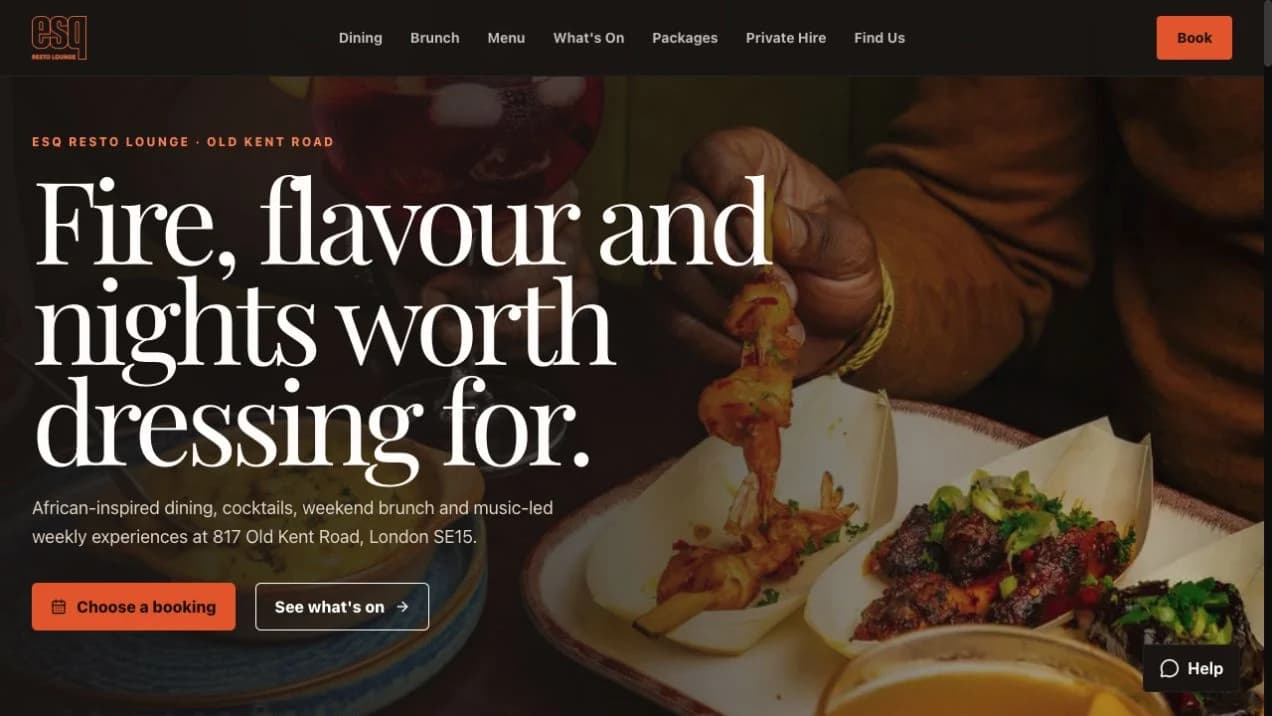
A restaurant website has to answer a series of practical questions. What kind of evening is this? What can I eat? Can my group come? How do I arrange it? Strong visual design helps, but the journey has to carry that information all the way through.
Design around the occasion
The ESQ website presents dining, brunch, events and private hire as distinct starting points. Someone planning a birthday needs different information from someone choosing dinner tonight. Making those paths visible helps the guest recognise where to begin.
Let the menu do its job
A useful menu supports browsing by category, readable dish descriptions and current prices. It should also make service and allergy information easy to find. The ESQ project connects those needs in a dedicated menu experience.
Make the next step truthful
A request is different from a confirmed reservation. Wazobia Old Kent Road’s delivered preview provides phone and email routes while its final domain and reservation infrastructure are prepared. The website should say what will happen when a guest acts.
Keep the operational details editable
Menus, events and opening arrangements change. Agree who updates them and where the authoritative record lives before launch. A polished page loses value quickly when the information behind it becomes stale.
The lesson for a hospitality brief is simple: define the guest’s next action and the team’s next action together. That connection is where a website becomes part of running the venue.