Engineering · 3 min read
Before adding features, connect the operating workflow
Kliqnet Digital · 8 September 2026
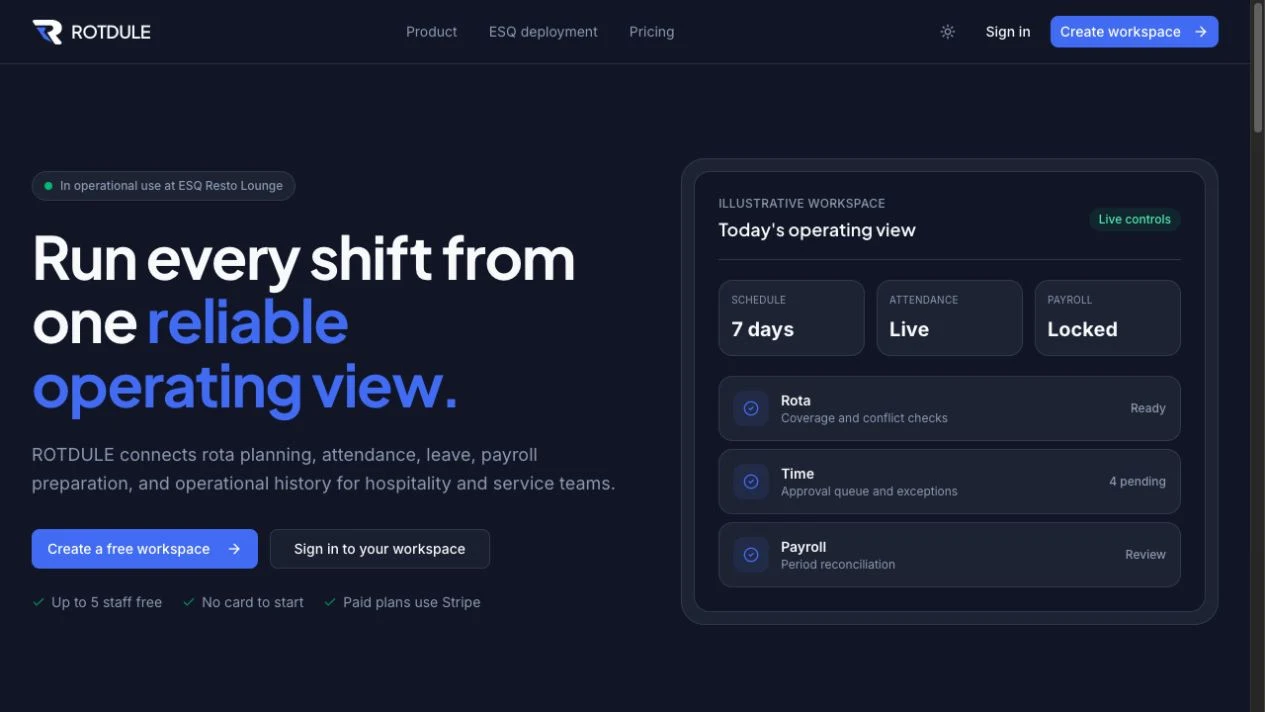
A long feature list can hide a weak handoff. A rota might exist without a dependable attendance record. A booking might appear without reaching the team who need to prepare for it. An uploaded document might sit in a folder without an owner for its review.
Follow one job from start to finish
Begin with a specific operational task. For workforce software, that could be planning a shift, recording what happened and preparing an approved record for payroll. ROTDULE’s product direction connects those stages in one working week.
Put responsibility beside status
A label such as “pending” is only useful if someone knows what happens next. Identify the person or role who can act, what evidence they need and what changes after their decision. This is a central consideration in care operations and workforce systems.
Separate shared software from shared data
A platform can serve multiple businesses while each organisation keeps its own records and configuration. Permissions and organisation boundaries need to be part of the underlying design, including reports, background work and external integrations.
Define release evidence
Agree a small set of complete workflows that demonstrate the release is usable. Include the less comfortable cases: a rejected request, a missing document, a provider failure or a duplicate submission. A launch checklist should reflect what people actually need to do.
Kliqnet’s operational products cover different industries. The shared principle is to build a clear path from an event to a record, a responsible person and the next action.